Space dust on your roof
Tiny pieces of space land all over the world, all the time. Some might be on your roof.
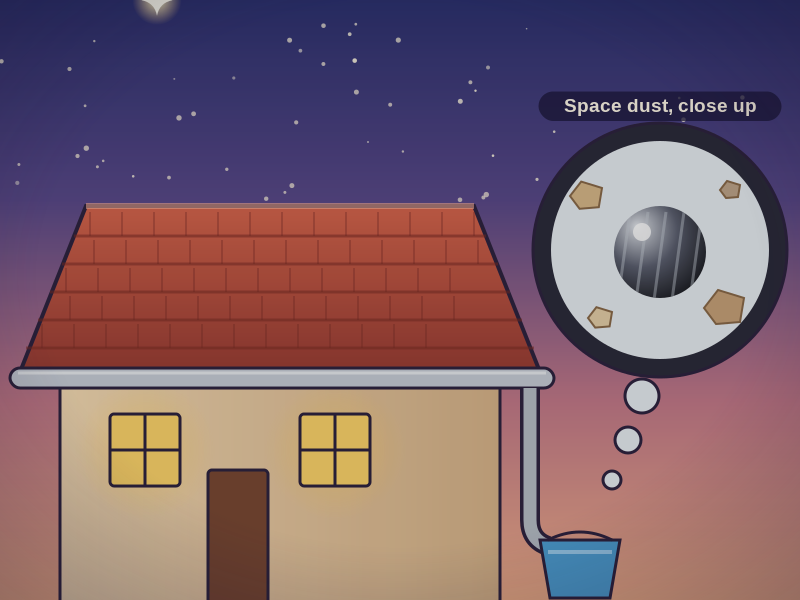
Not all space rocks are big. Most of the bits that reach Earth are tiny, smaller than a grain of sand.
They are called micrometeorites. Because they are so small, the air slows them down gently. Many survive and float down to the ground.
Scientists think thousands of tonnes of this space dust reach the ground every year. It lands everywhere: on oceans, deserts, fields and rooftops.
Most micrometeorites that are found are tiny balls. They melted as they fell through the air, then cooled into little round beads, some shiny and dark.
Scientists collect them from Antarctic snow and from the bottom of the sea, where they have been piling up for a long time. Some people have found them in dust from gutters on city roofs.
Sorting real space dust from ordinary dust is hard. It needs a microscope, a lot of patience and careful checking by experts.
If you want to hunt for space dust, always do it with a grown-up. Never climb onto a roof or up a ladder. Rain washes roof dust down the drainpipe, so a grown-up can collect it safely from the ground. Wear gloves, and wash your hands afterwards.
Most micrometeorites are less than half a millimetre across. Several could sit side by side on the head of a pin.
With a grown-up, wrap a magnet in a plastic bag and stir it through some wet sand or soil. Look at what sticks with a magnifying glass. Most of it will be Earth dust, but this is how scientists start their search.